How to Read Sheet Music for Piano Beginners
A beginner-friendly guide to reading piano sheet music, including the staff, clefs, middle C, rhythm, note landmarks, and simple practice steps.

Quick Answer
To read piano sheet music as a beginner, start with the staff, the clefs, and a few landmarks. The treble staff usually shows higher notes played with the right hand, while the bass staff usually shows lower notes played with the left hand. Middle C sits between them and helps you connect written notes to the keyboard. Do not try to memorize every note at once. Learn a few landmarks, notice whether notes move up or down, count simple rhythms, and practice very short sections slowly.
What Sheet Music Shows
Sheet music is a map for sound. It tells you which notes to play, when to play them, and how long to hold them.
For beginners, the page can look crowded at first. The useful first step is to separate the page into simple jobs:
- The staff shows whether notes are higher or lower.
- The clef tells you which note range you are reading.
- The note head shows the pitch.
- The note shape helps show rhythm.
- The measure lines divide the music into small counting groups.
- The fingering numbers sometimes suggest which fingers to use.
You do not need to understand every symbol before playing your first beginner song. Start with the symbols that affect what you do immediately: note direction, rhythm, and hand position.
The Staff, Clefs, And Middle C
Piano music often uses two staves joined together. This is called the grand staff.
The upper staff usually uses the treble clef. Beginners often connect it with right-hand notes and higher sounds. The lower staff usually uses the bass clef. Beginners often connect it with left-hand notes and lower sounds.
Middle C is the bridge between them. It sits near the center of the keyboard and appears between the treble and bass staves.
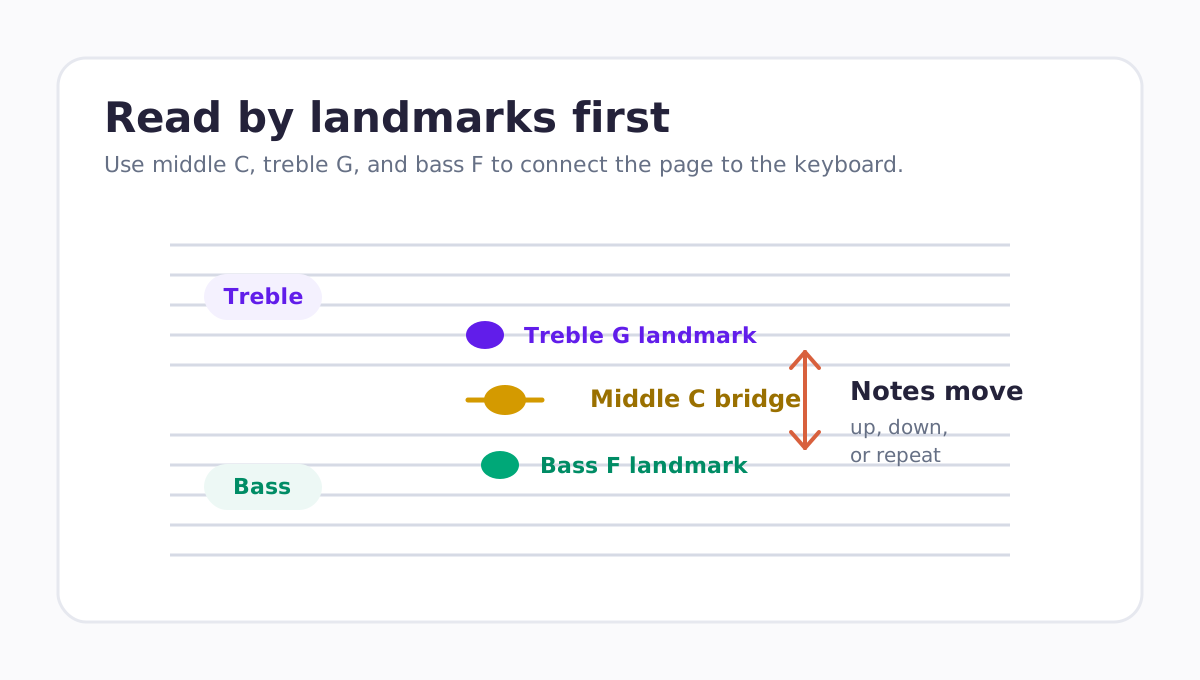
These landmarks matter because they reduce guessing. If you know where middle C is, you can count nearby notes step by step instead of trying to memorize the whole page at once.
Start With Landmarks, Not Every Note
Many beginners try to memorize every line and space immediately. That can feel overwhelming.
A better first method is to learn landmarks:
- Middle C: the bridge between both hands.
- Treble G: a useful right-hand landmark on the treble staff.
- Bass F: a useful left-hand landmark on the bass staff.
- Nearby notes: notes that sit one step above or below a landmark.
Once you know a landmark, you can read nearby notes by direction. If the next note is one step higher on the staff, move one key to the right on the keyboard. If it is one step lower, move one key to the left.
This is slower at first, but it builds real reading skill.
Notice Whether Notes Move Up, Down, Or Repeat
Beginners often stare at each note as if it is completely new. Instead, look for movement.
Ask:
- Does the note repeat?
- Does it move one step up?
- Does it move one step down?
- Does it skip over a note?
- Does it jump farther?
Stepwise motion is common in beginner music. If you can see that the melody moves up by step, your fingers can follow that shape on the keyboard.
This is why reading sheet music is connected to keyboard geography. The page and the keys are describing the same musical direction.
Learn Rhythm Separately
Reading notes is only half of sheet music. Rhythm tells you when notes happen and how long they last.
For early piano reading, start with a few simple rhythm ideas:
- Quarter notes: usually count as one beat.
- Half notes: usually count as two beats.
- Whole notes: usually count as four beats.
- Rests: counted silences.
- Bar lines: dividers that help organize counting.
Before playing, clap the rhythm or tap it on your lap. Count out loud if needed. Then play the notes slowly.
This separates two hard jobs. First you understand the timing. Then you add the keyboard.
Connect The Page To The Keyboard
A beginner should not read sheet music only with their eyes. The goal is to connect the page, the keyboard, the fingers, and the sound.
Use this process:
- Find the starting note on the page.
- Find the matching key on the keyboard.
- Notice whether the next note repeats, steps, skips, or jumps.
- Say or count the rhythm.
- Play slowly enough that you can look ahead.
If you lose your place, do not restart the whole piece automatically. Find the measure where you got lost and restart from there.
Practice Reading In Tiny Sections
Reading improves faster when the task is small.
A good beginner section might be:
- two measures
- one short phrase
- the right hand only
- the left hand only
- three notes around middle C
Read the section slowly. Then repeat it. Then cover the note names if you wrote them in. The goal is to recognize patterns, not to depend on written letters forever.
For a simple daily structure, combine this with a short practice routine such as 15-Minute Piano Practice Routine for Beginners.
Should Beginners Write Letter Names On Sheet Music?
Letter names can help briefly, but they should be used carefully.
Helpful uses:
- marking the first note
- checking a difficult note
- learning where middle C appears
- connecting a new note to the keyboard
Risky uses:
- labeling every note forever
- ignoring rhythm
- ignoring whether notes move up or down
- looking only at letters instead of music patterns
If you write note names, remove them gradually. Sheet music becomes easier when you learn to see shapes and movement, not only letters.
Common Beginner Reading Mistakes
The most common mistake is trying to read too much at once.
Other common mistakes include:
- practicing pieces that are too hard
- ignoring rhythm until later
- restarting from the beginning after every mistake
- staring at the hands instead of the page
- writing every note name above the staff
- trying to play both hands before either hand is secure
The fix is usually simple: make the section smaller, slow down, and read from a landmark.
Practicing Sheet Music With tonestro
tonestro helps piano beginners connect notes, rhythm, and practice structure. When you work on beginner sheet music, use the app to practice short sections, repeat difficult parts, and build confidence before moving on.
The point is not only to identify notes correctly. The goal is to make reading useful for real music: steady rhythm, relaxed movement, and a clearer connection between the page and the keyboard.
Related Reading
- Piano Notes for Beginners
- What Is Middle C on Piano?
- Easy Piano Songs for Beginners
- 15-Minute Piano Practice Routine for Beginners
- How to Learn Piano for Beginners
FAQ
Is sheet music hard to read for piano beginners?
Sheet music can look difficult at first, but beginners do not need to read everything at once. Start with middle C, a few landmarks, simple rhythm, and very short sections.
Should I learn piano notes before reading sheet music?
Yes. It helps to know the keyboard note names before reading much sheet music. You do not need perfect speed, but you should understand the repeating C-D-E-F-G-A-B pattern.
What should I read first in piano sheet music?
Start with the clef, the starting note, and the rhythm. Then notice whether the next notes repeat, step, skip, or jump.
Do piano beginners need to read both clefs right away?
Not always. Many beginners start with the right hand in treble clef, then add left-hand bass clef gradually. Middle C helps connect the two.
Is it bad to write note names on sheet music?
It is not bad if you use note names briefly. The risk is depending on them too long. Use them as a bridge, then practice reading landmarks and note movement.
How long does it take to read piano sheet music?
Beginners can learn the first basics in a few weeks, but fluent reading takes months of regular practice. Progress depends on how often you read simple music, count rhythm, and connect notes to the keyboard.
Last updated